Most importers judge an air conditioner by its specification sheet. Capacities, SEER classes and refrigerant codes are easy to compare, so they become the whole conversation. The problem is that two factories can print the same sheet and still ship very different machines, because the difference is not in the specification. It is in how many units actually get tested, and what happens to the ones that fail.
This article walks through the checks a split AC goes through on a well-run export line, in the order they happen, with photographs taken on the line. Use it as a checklist when you audit a supplier, or as a script for the questions you ask before placing a container order.
Why line testing beats sample testing
A lab report proves that one unit, chosen by someone, met a standard on one day. Line testing proves something different and more useful: that the process is repeatable, and that defective units are being removed rather than packed.
For a distributor, the economics are simple. A failure found in the factory costs a few dollars of labour. The same failure found by your customer costs a service call, a replacement unit, freight in both directions, and a share of the trust you spent years building. Every check below exists to move failures upstream.
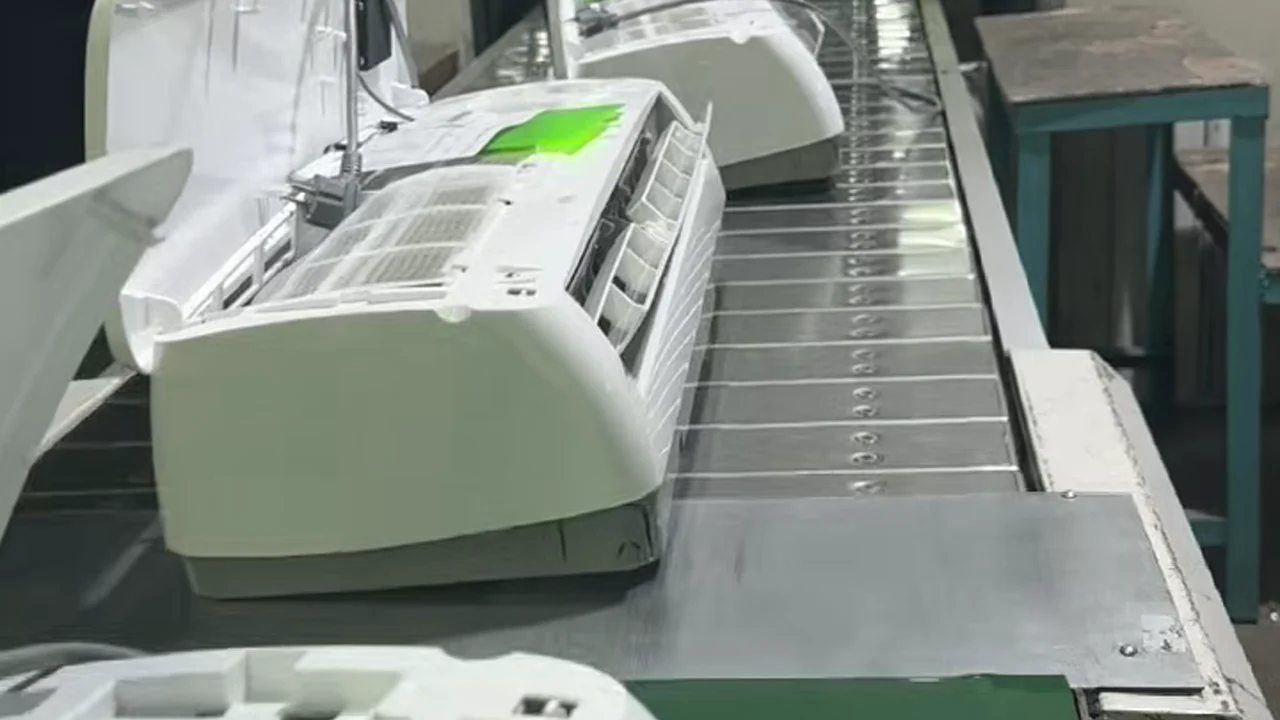 Indoor units on the leak and electrical test station. Every unit passes through, not a sample.
1. Incoming component inspection
Testing starts before assembly. Compressors, motors, control boards and heat exchangers arrive from different suppliers, and a single batch of out-of-tolerance capacitors or a compressor with the wrong oil charge will produce failures that only appear months later in the field.
What a serious line does: dimensional and electrical checks on incoming lots, plus a first-article assembly built from each new lot and run through the full test sequence before mass production starts.
What to ask: which components are inspected on receipt, and how often a first-article unit is built and tested.
2. Brazing and leak testing of the refrigerant circuit
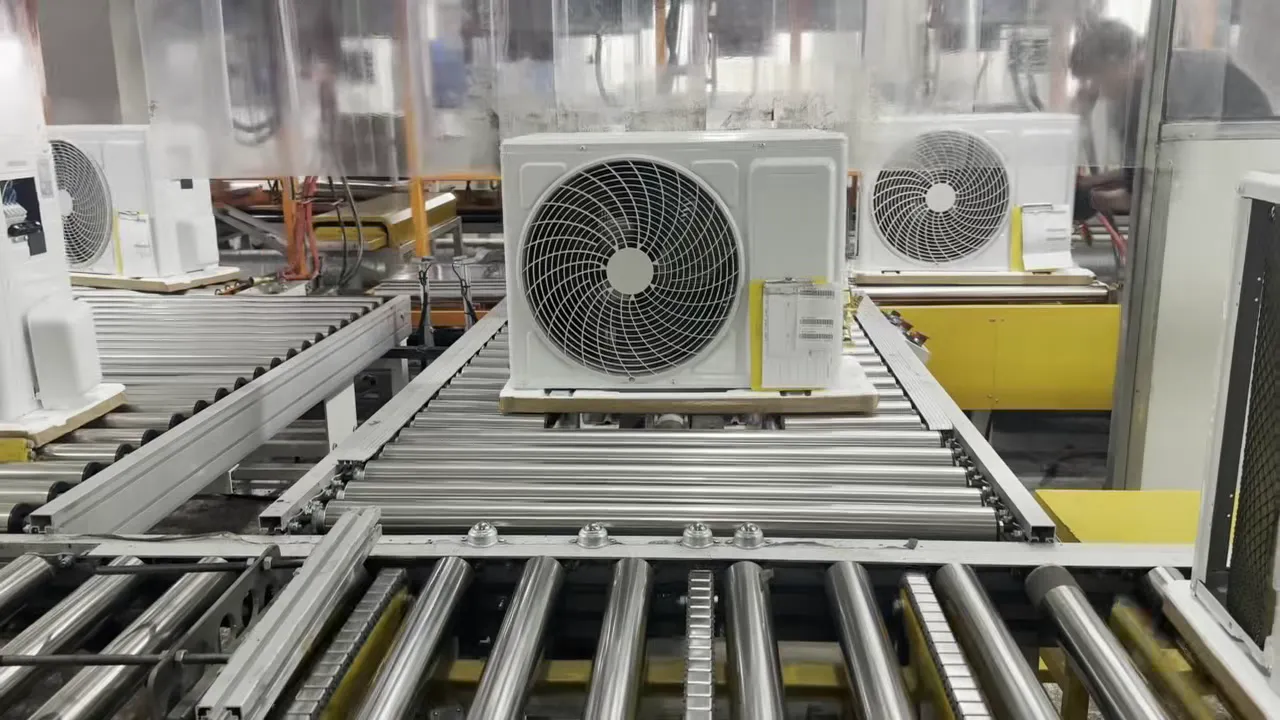 Condenser circuit brazing. Joint quality here decides whether the unit leaks in year three.
A split system’s most common field failure is a slow refrigerant leak, and most slow leaks start at a brazed joint. Nitrogen-purged brazing prevents internal oxidation; a pressure or helium leak test then confirms every joint before the circuit is charged.
On the line this is a 100% test, not a sample. Units are pressurised and held, and any pressure drop takes the unit out of the flow. A factory that tests “a few units per batch” is telling you something important about its process.
3. Refrigerant charging by weight
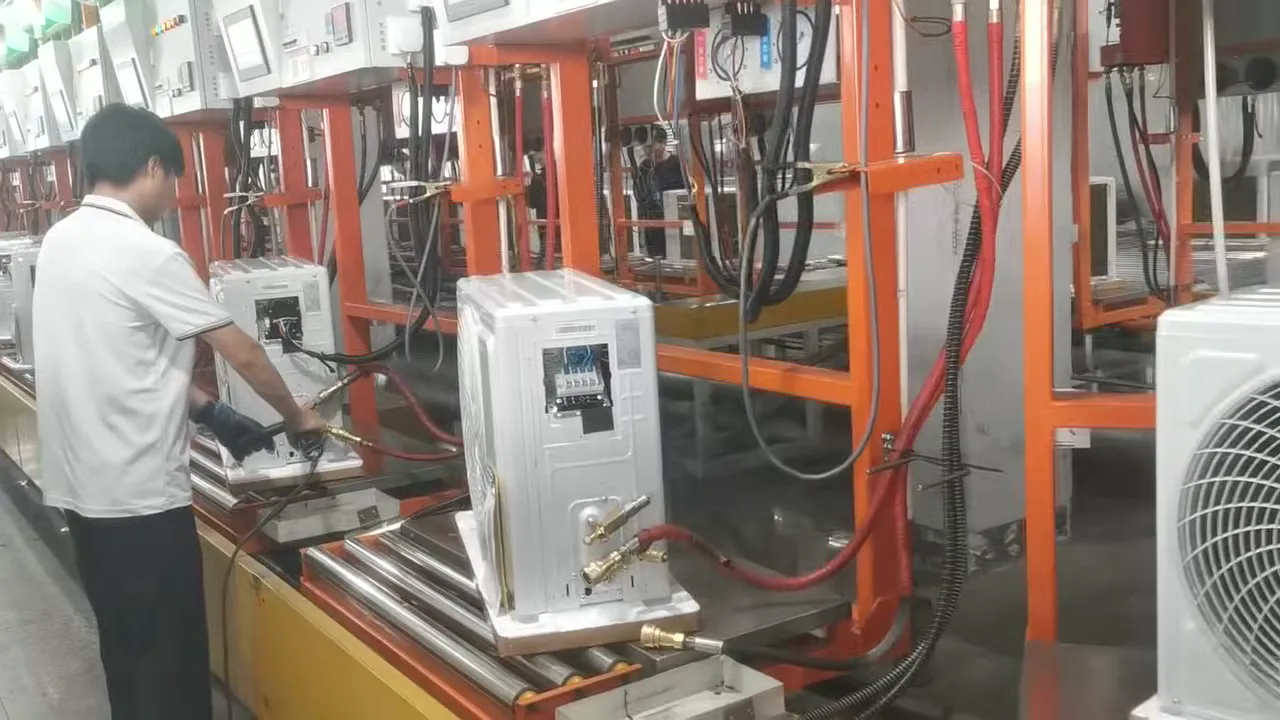 Charging station. Charge weight is set by scale, not by feel.
Correct charge weight is a performance issue and a durability issue at the same time. Undercharge costs capacity and can overheat the compressor; overcharge raises discharge pressure and current draw, which matters most in exactly the hot markets most importers are selling into.
Charging by electronic scale against the model’s specified weight, with the record kept per unit or per batch, is the standard to look for. Ask whether the charge is verified by weight or by pressure alone. Pressure-only charging drifts with ambient temperature in the plant.
4. 100% electrical safety test
Every unit should see a hipot (dielectric strength) test and an earth continuity test before it is packed. This is a safety requirement in every destination market and, just as importantly, it catches assembly errors such as a pinched harness or a mis-seated connector that would otherwise become a dead unit on arrival.
The test station in the photograph below is where the insulation and earth checks are done. Units that fail are pulled and reworked; the station records the pass count against the line count.
5. 100% remote-control and function test
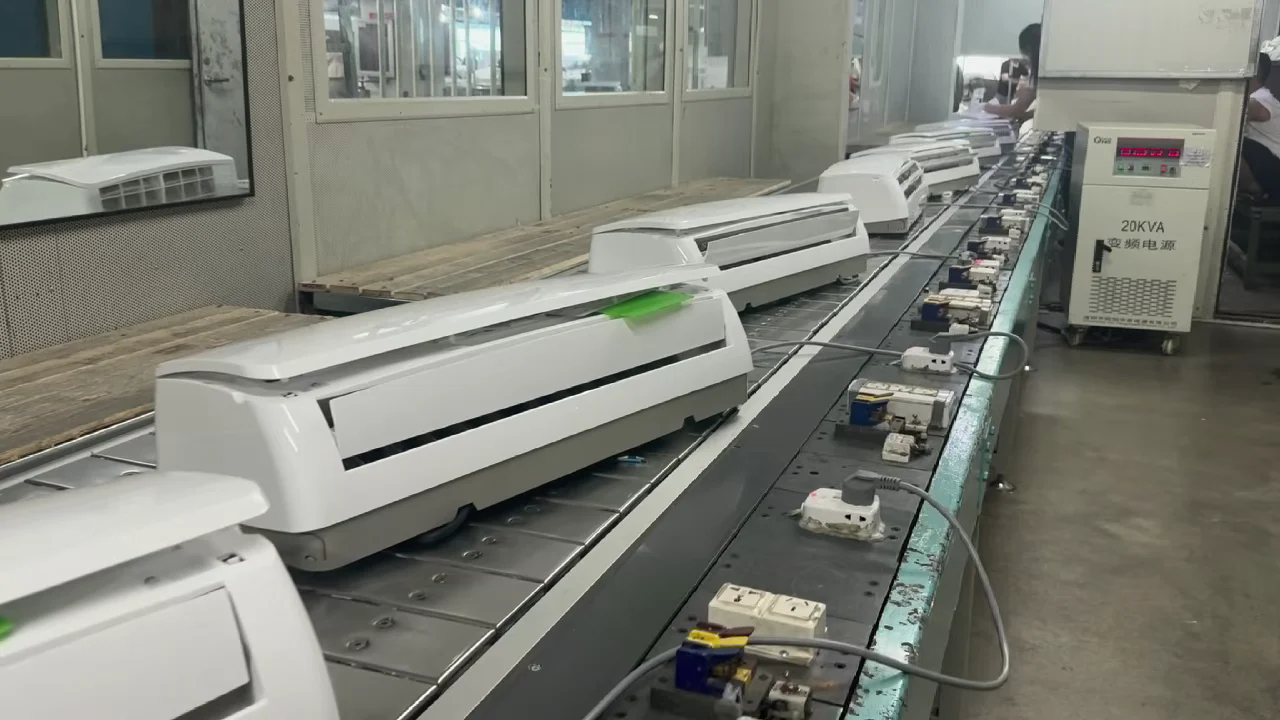 Function test line: each unit is powered, addressed and cycled through its modes.
A remote that does not pair, a display that does not light, a swing motor that does not move: these are exactly the defects that ruin the unboxing experience, and exactly the ones that a sample test misses. On a 100% function test, every unit is powered up and cycled through cooling, fan speeds, swing and timer, usually with the remote it will ship with.
This is also where the product’s own remote and manual get packed with the unit, which is why a “QC passed” label on the accessory bag is a useful signal of a real test step rather than a sticker added at the end.
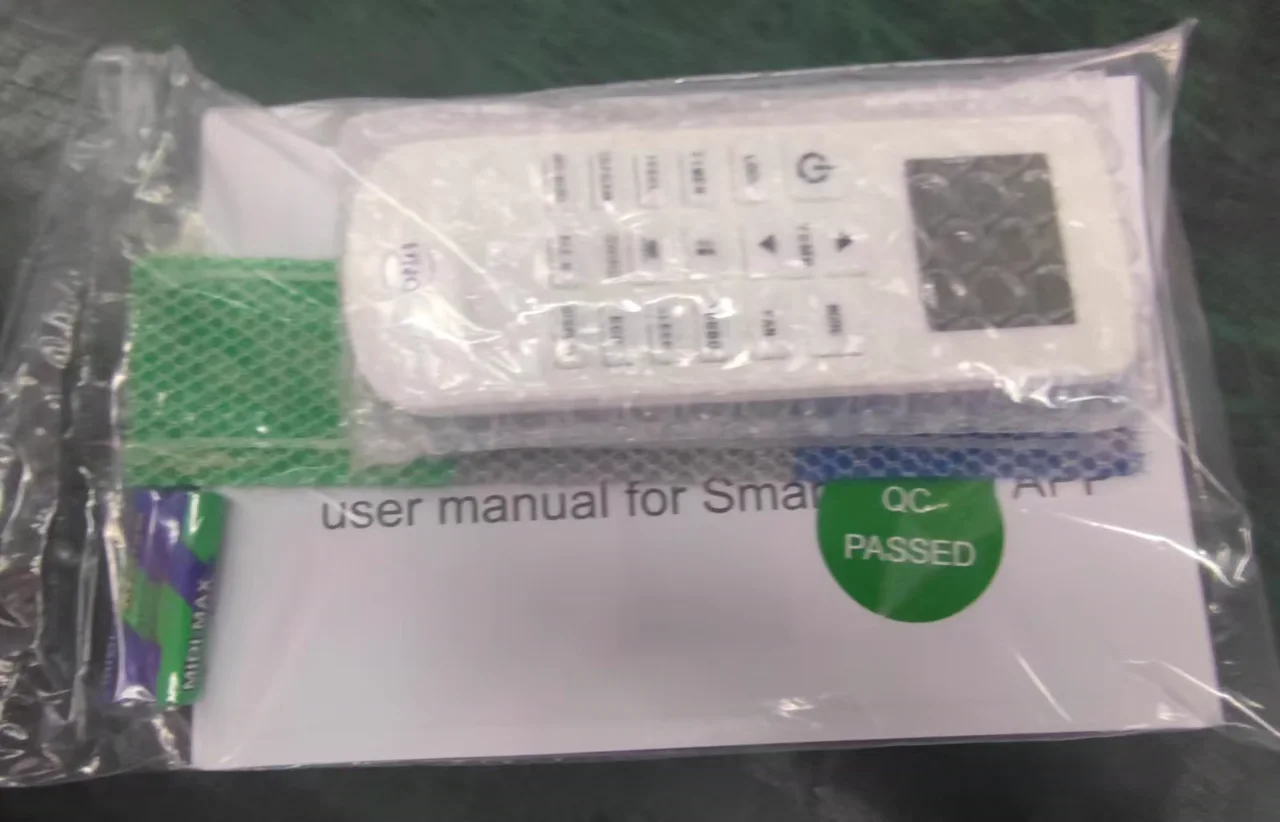 Accessory bag with remote, English user manual and a QC pass label. The sticker should correspond to a test record, not to a packing step.
6. Final visual and manual inspection
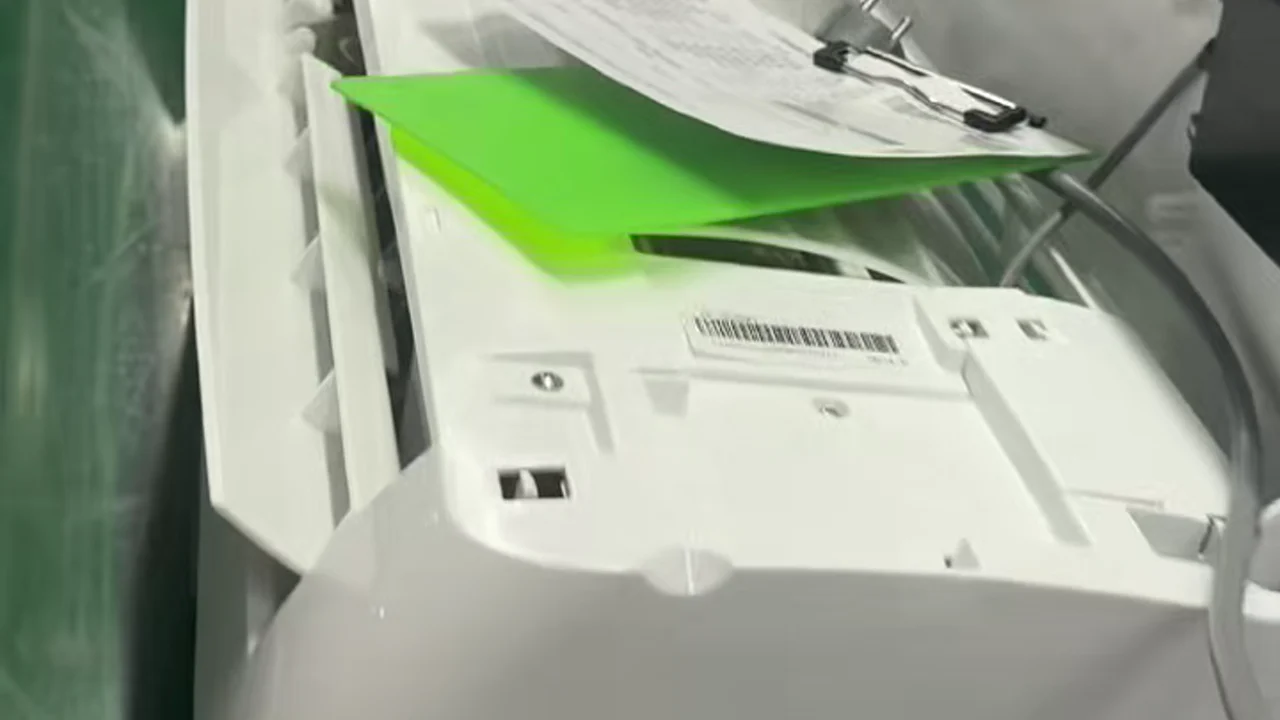 Final inspection: checklist, barcode, cosmetic check.
Before packing, an inspector checks the cosmetic surface, the label and nameplate, the barcode, the accessory kit and the carton print against the order’s artwork. For private-label orders this step protects both sides: a wrong logo on 600 cartons is a very expensive discovery at the destination port.
Ask for the inspection checklist itself, not just the promise that one exists. A checklist with fields for model, serial range, inspector and date is auditable. A tick in a box is not.
7. Ageing and random run test
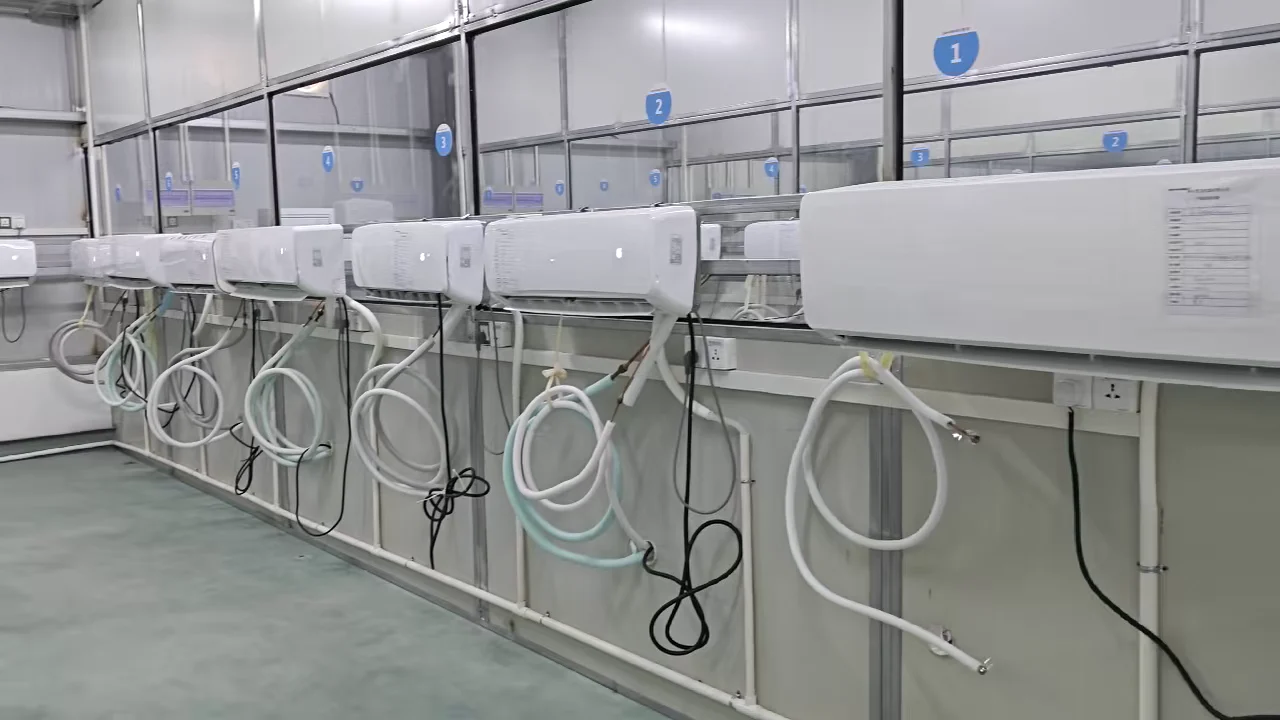 Aging room. Units run continuously before release; the numbered zones correspond to test batches.
Running a unit for a few minutes proves it switches on. Running it continuously for a long period proves something closer to what your customer will experience: that the compressor does not overheat, that the control board survives thermal cycling, and that the charge is stable.
Sampled units are pulled from finished stock and run for extended periods, up to 60 continuous hours in the sampled batches, with discharge temperature and current checked along the way. It is a destructive-use test in the sense that those units are no longer sellable as new, which is precisely why it is a credible signal when a factory does it routinely.
What to ask: how many units per batch, for how many hours, and whether the run log is available.
8. Energy-efficiency verification in the lab
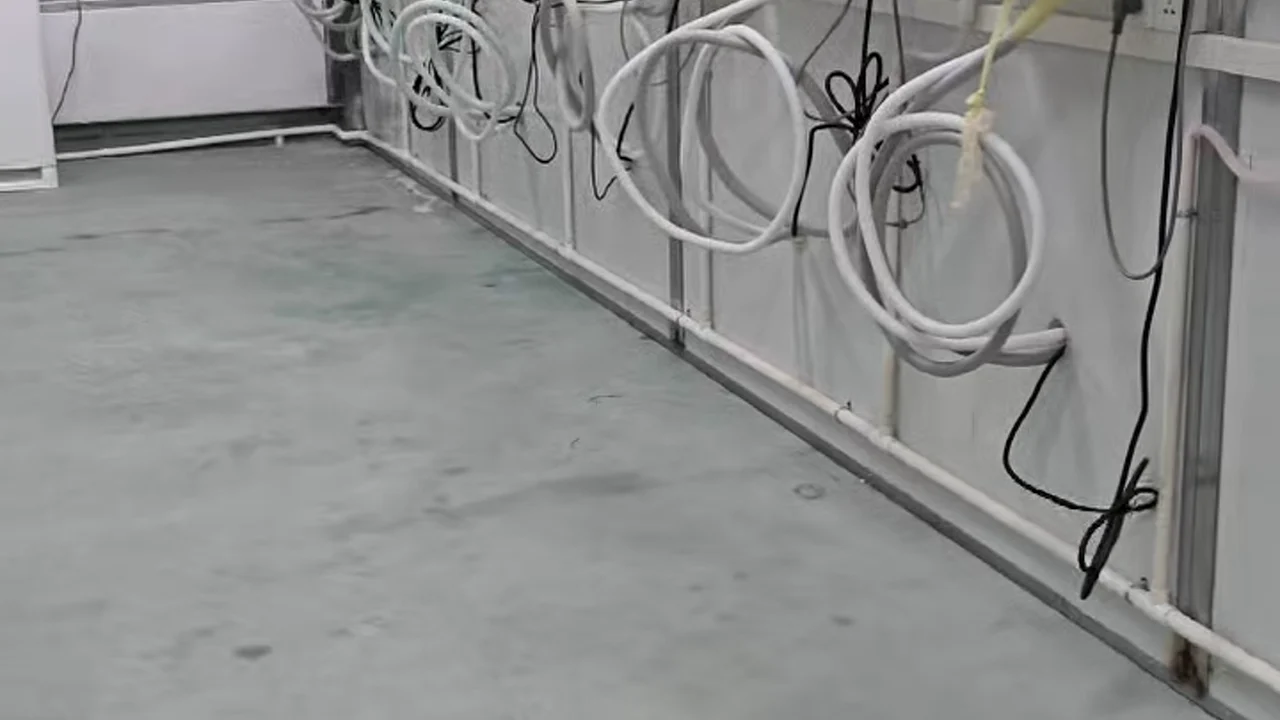 Calorimeter room used for capacity and energy-efficiency verification.
Capacity and efficiency claims are what your market’s labelling regime will hold you to. A calorimeter or enthalpy lab lets the factory verify that a production unit still matches the tested rating, and that a change of compressor supplier, capillary or charge weight has not quietly moved the numbers.
If you are importing into a market with mandatory MEPS registration, ask for the test report that matches the exact model and voltage you are ordering, and ask how often a production unit is re-verified against it.
9. Packing, warehousing and container loading
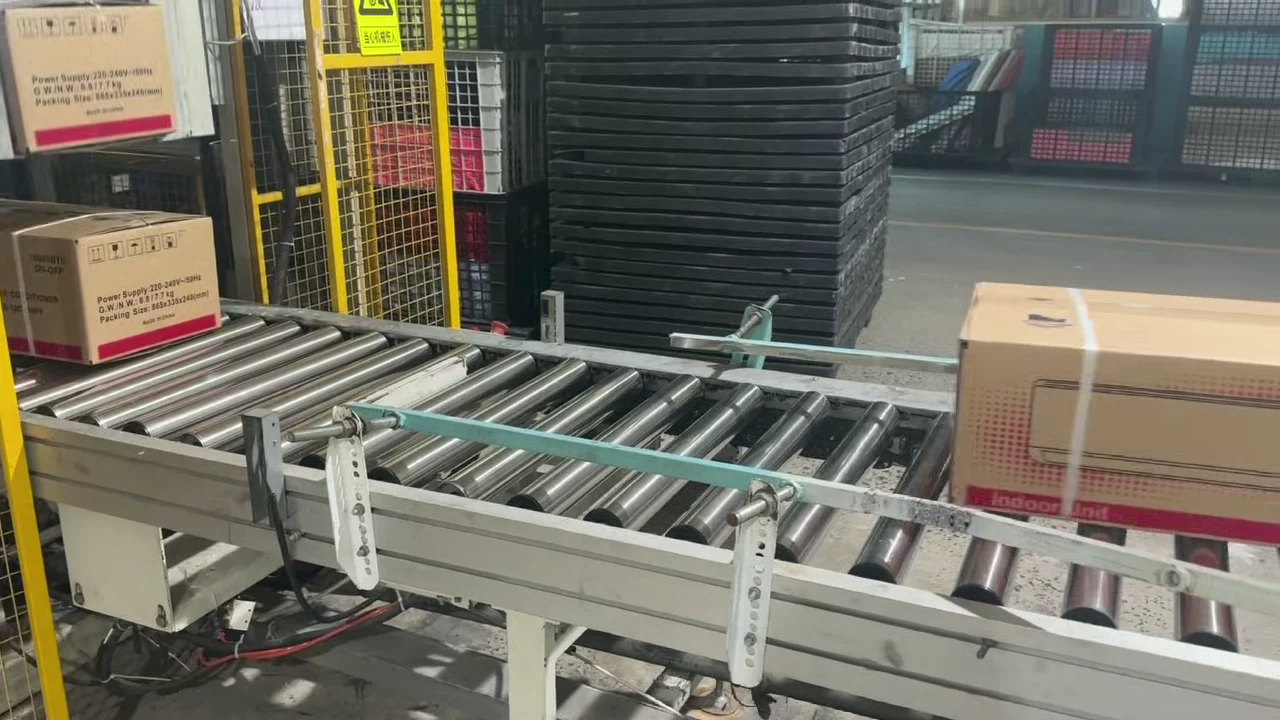 Packing line. Carton strength and stacking rules matter as much as the machine inside.
A perfectly built unit can still arrive damaged. Carton board grade, internal foam, corner protection and stacking height decide whether your container arrives sellable. For SKD and CKD shipments the packing logic changes completely, because parts are packed as sub-assemblies rather than as a finished machine.
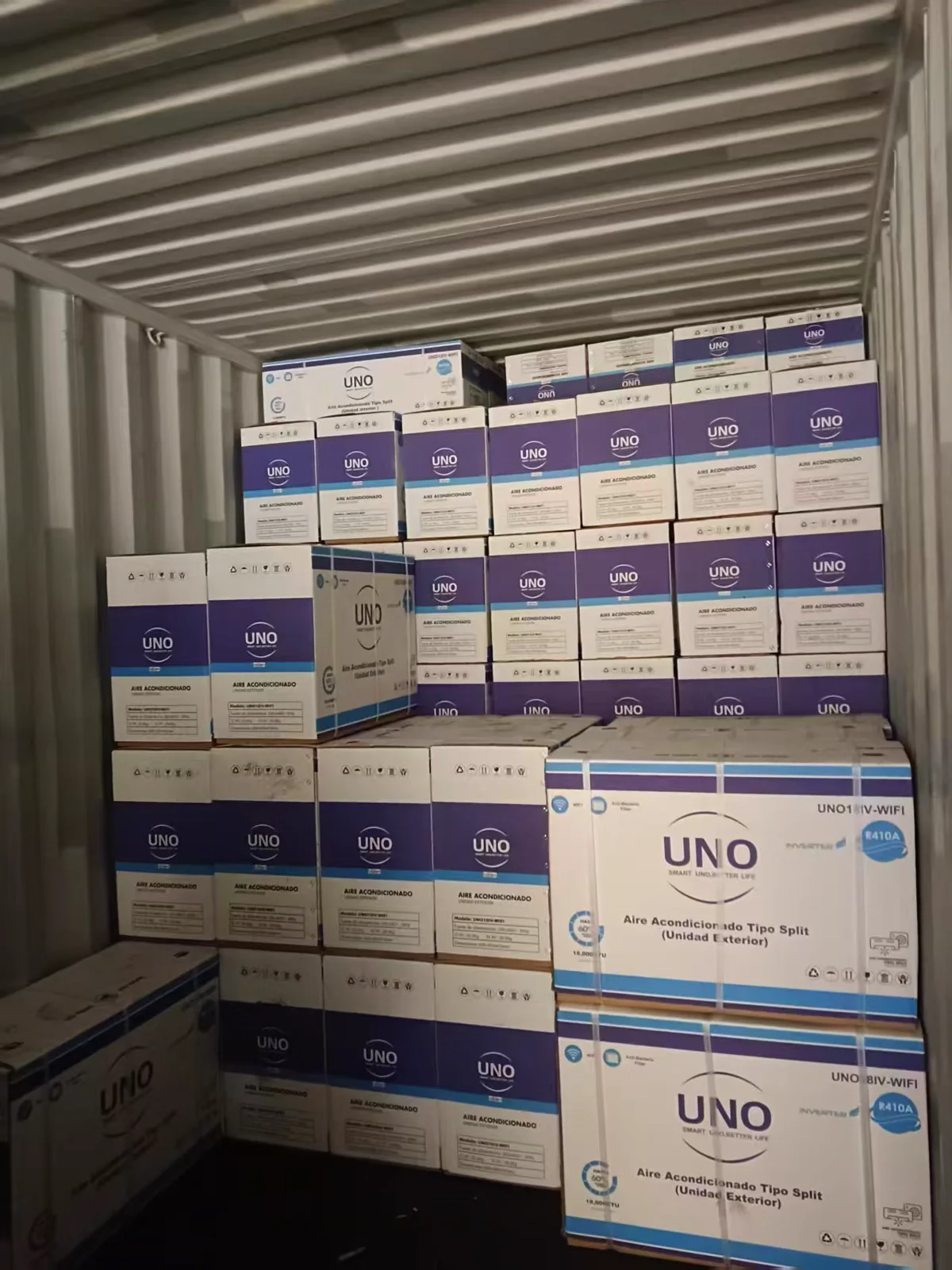 A private-label container loaded with Spanish-language cartons. Carton print, model marking and stacking follow the order’s artwork.
The checks, and what each one protects you from
| Check | Coverage | Failure it prevents |
|---|---|---|
| Incoming component inspection | Per lot | Batch-wide defects from one bad component supply |
| Brazing and leak test | 100% | Slow refrigerant leaks and warranty claims |
| Charge by weight | 100% | Capacity loss, compressor overheating, high current |
| Electrical safety (hipot, earth) | 100% | Safety failures and dead-on-arrival units |
| Remote and function test | 100% | Unboxing defects, mode and display faults |
| Final visual inspection | 100% | Wrong logo, label, artwork on private-label orders |
| Ageing / long run test | Sampled | Early-life compressor and board failures |
| Energy lab verification | Sampled | Rating drift, MEPS non-compliance |
| Packing and loading check | Per shipment | Transit damage and stacking failures |
A short audit checklist for your next supplier visit
- Can I see the leak test station, and is it 100% or sampled?
- Is charge weight set by scale, and where is the record kept?
- Do you hipot every unit?
- Which units go to the ageing room, and for how long?
- Can I see the final inspection checklist for my order?
- Which lab produced the energy report for the exact model I am ordering?
- Who signs the pre-shipment inspection report, and can I have a copy with the container photos?
A supplier who answers these with documents and station photos is a different kind of partner from one who answers with adjectives.
Frequently asked questions
Is 100% testing standard in Chinese split AC factories? Electrical safety and function testing are standard on export lines serving regulated markets, because they are also compliance requirements. Leak testing is nearly universal. Long-run ageing and lab re-verification are the steps that vary most between suppliers, and they are the ones worth asking about explicitly.
How long should a split AC run before it is packed? A short functional cycle is normal. Extended runs, from several hours up to 60 hours on sampled units, are a quality decision rather than a regulatory one, and they are a good indicator of how seriously a factory treats early-life failures.
Does a “QC passed” sticker mean anything? Only if it maps to a test record. Ask what the sticker corresponds to: which station, which record, which date.
What should a pre-shipment inspection report contain? Model and serial range, quantity by carton, test results by station, cosmetic findings with photographs, carton and label verification against the artwork, container number and loading photos.
Next step
If you are comparing suppliers for a container order and want the test records, packing list and model documentation for a specific market, send us the destination country, capacity range and voltage, and we will come back with the configuration and the paperwork that goes with it.