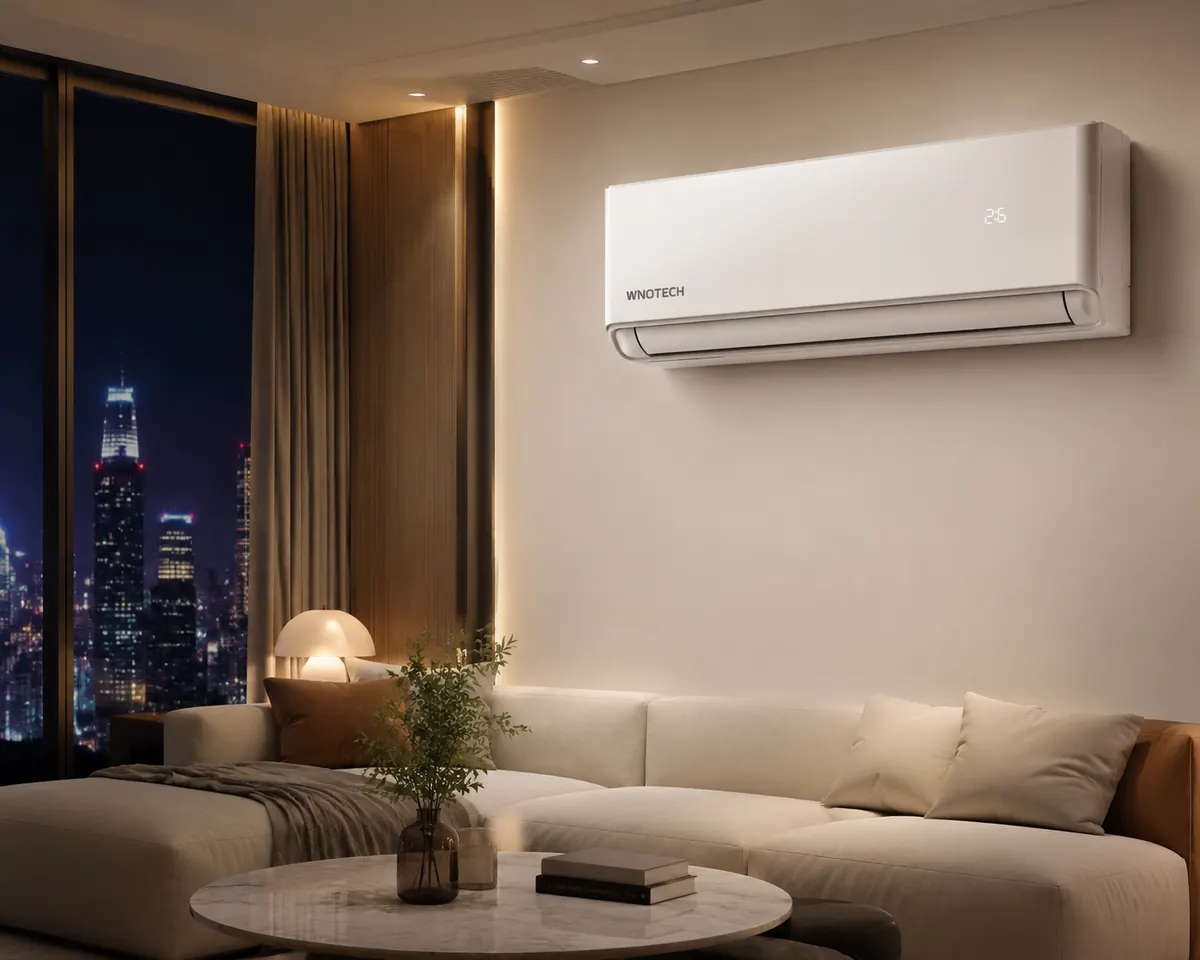
The European Union’s revised energy labelling regulation came into full effect in March 2021, replacing the old A+++ to G scale with a new A to G scale for air conditioners. For manufacturers and exporters targeting the EU market, understanding this rescaled system is no longer optional — it is a fundamental compliance requirement.
Why the EU Rescaled Its Energy Labels
The original A+++ to G scale, introduced in the 1990s, became increasingly ineffective as nearly all modern appliances clustered at the top end. By 2019, over 90% of air conditioners sold in Europe carried an A++ or A+++ rating, making it nearly impossible for consumers to differentiate between products.
The new scale — running from A (most efficient) to G (least efficient) — was deliberately designed to be “future-proof.” Under the current framework, the A and B categories are intentionally left empty at launch, creating headroom for future technological improvements. This means that a product rated B or C on the new scale is still considered highly efficient by today’s standards.
Key Technical Requirements: SEER and SCOP
The two primary metrics used to determine energy label ratings are:
| Metric | Full Name | Measures |
|---|---|---|
| SEER | Seasonal Energy Efficiency Ratio | Cooling efficiency over the full season |
| SCOP | Seasonal Coefficient of Performance | Heating efficiency over the full season |
For residential split air conditioners, the minimum thresholds to achieve each label class (cooling mode, average climate) are approximately:
| Label Class | Minimum SEER |
|---|---|
| A | ≥ 8.50 |
| B | ≥ 6.10 |
| C | ≥ 5.60 |
| D | ≥ 5.10 |
| E | ≥ 4.60 |
| F | ≥ 4.10 |
| G | < 4.10 |
WNOTECH AIR’s inverter series (WN-EL and WN-PL) are designed to achieve C to D class ratings on the new EU scale, making them competitive for price-sensitive European markets while still meeting ErP Directive requirements.
What Exporters Must Provide
Under EU Regulation 2019/2016 (the “Ecodesign Regulation”), manufacturers and importers placing air conditioners on the EU market must:
- Register products in the EPREL database (European Product Registry for Energy Labelling) before placing them on the market.
- Provide a product fiche (technical datasheet) containing all required parameters including SEER, SCOP, sound power levels, and refrigerant type.
- Affix the correct energy label to the product packaging and display it in all digital and print marketing materials.
- Maintain technical documentation for at least 10 years after the last unit is placed on the market.
Refrigerant Compliance: R32 and the F-Gas Phase-Down
The EU’s F-Gas Regulation (EU 517/2014) is phasing down the use of high-GWP refrigerants. From 2025, the quota for HFCs placed on the EU market will be significantly reduced. This makes R32 (GWP: 675) the preferred refrigerant for new air conditioner products targeting Europe, as it falls well below the 750 GWP threshold that triggers additional restrictions.
All WNOTECH AIR products are available with R32 refrigerant as standard, ensuring full compliance with current and near-future EU F-Gas requirements.
Practical Steps for Importers
If you are importing WNOTECH AIR products for the European market, here is a simplified compliance checklist:
- Confirm the SEER/SCOP values for your specific model and climate zone (average, warmer, or colder).
- Register the product in the EPREL database under your company’s importer account.
- Obtain the correct energy label files (in the required digital format) from WNOTECH AIR.
- Ensure all product listings — online and in print — display the current energy label.
- Verify that the refrigerant charge and type are declared on the product nameplate.
WNOTECH AIR provides full technical documentation packages for all products, including EPREL-ready product fiches, energy label artwork files, and CE Declaration of Conformity. Contact our export team at inquiry@unitechgrupo.com to request documentation for your specific models.
Looking Ahead: The 2030 Revision
The European Commission has signalled that the energy label scale will be reviewed again around 2030, with the possibility of introducing A-rated products as efficiency technology improves. Exporters should plan their product roadmaps accordingly, targeting higher SEER values in new model development to maintain competitiveness as the regulatory bar rises.
For importers and distributors building long-term supply relationships, partnering with a manufacturer that invests in R&D and energy efficiency — rather than simply meeting the minimum threshold — is the most sustainable strategy.
For product specifications, SEER/SCOP data, and export documentation, contact WNOTECH AIR at inquiry@unitechgrupo.com or via WhatsApp at +86 159 2631 2664.